
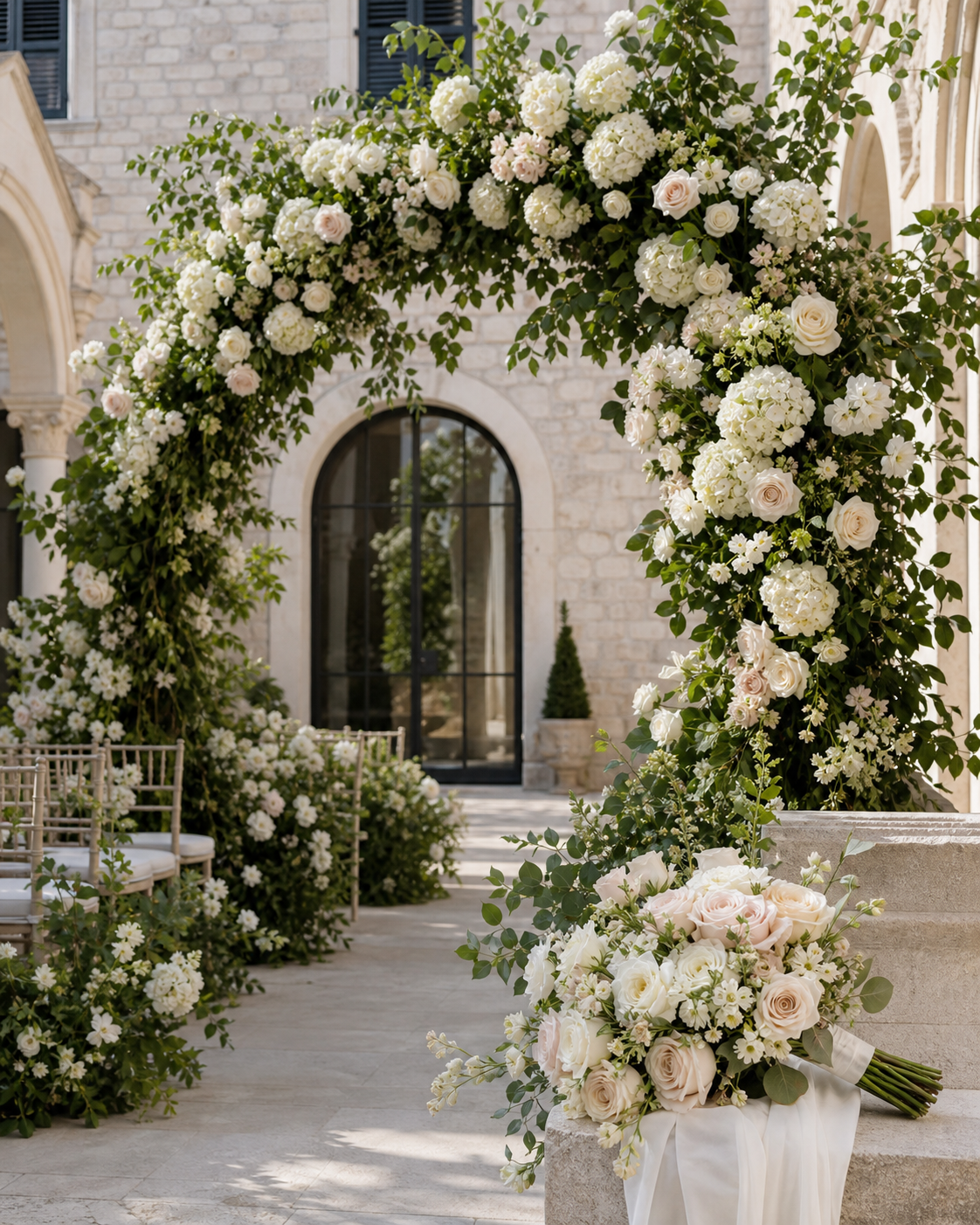
Weddings & Events
Artificial Wedding Flowers: The Real Cost Comparison
Aug
Flowers are usually somewhere between the third and fifth largest line on a wedding budget, and they are the only one that is thrown away the next morning. That fact alone has moved a large share of wedding florals to artificial over the last decade — not because artificial is cheaper per stem, but because of what happens around the flowers.
This is an honest comparison. There are situations where fresh is clearly better, and this covers those too.
Where the money actually goes
People compare the cost of a fresh bouquet against an artificial one and conclude the difference is small. That comparison misses most of the real cost.
Fresh flowers carry timing costs. They must be ordered for a specific date, delivered within a narrow window, kept cool until the ceremony, and arranged either the night before or the morning of. That means either paying a florist for setup labour, or committing a family member to several hours of work on the day.
They carry risk costs. Wholesale flower prices move with season and weather. A cold snap in the growing region six weeks before your date can change what is available and what it costs. Peonies out of season cost several times their in-season price, and some varieties simply cannot be sourced.
They carry waste. Centrepieces for twelve tables are used for roughly five hours. Guests occasionally take them; more often they go in a bin.
Artificial flowers move all of that. They are bought once, at a price you can see before committing, arranged whenever you have time, and they exist afterwards.
The four flowers that dominate wedding work
Wedding florals are more standardised than most people expect. Four flowers cover the majority of arrangements, and all four have specific reasons for being replaced with artificial.
Hydrangea
Hydrangea is the volume flower — the one that fills a centrepiece so you need fewer expensive stems around it. It is also among the most fragile cut flowers there is.
Fresh hydrangea wilts within hours out of water because the thick stems block quickly. Florists sear or split the stems to slow it, and it still fails in a warm room. In a marquee in July, a hydrangea centrepiece arranged at 9am can be visibly drooping by the time guests sit down.
This is the single strongest case for artificial in wedding work. Faux hydrangea heads look identical at guest distance and are simply not affected by heat.
Roses
Roses have the opposite problem: they open. A rose bought tight enough to survive transport is too closed on the day; one that looks right in the shop is over-blown by the afternoon.
Managing that is genuine florist skill, which is part of what you pay for. Artificial roses sit at a fixed stage of opening, which removes the variable entirely.
Eucalyptus
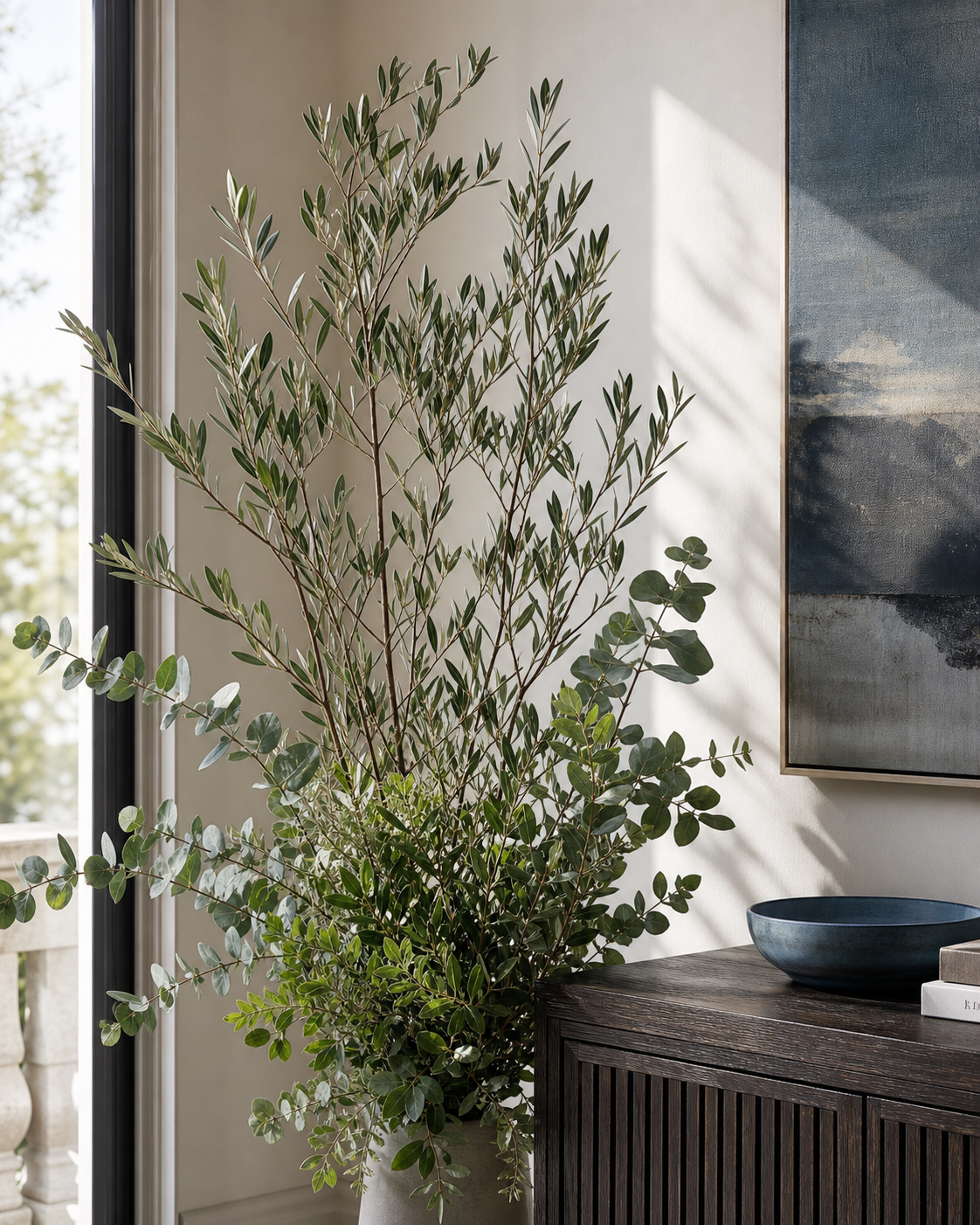
Almost every modern wedding uses eucalyptus — in runners, in bouquets, trailing off arches. Fresh eucalyptus curls and greys within about two weeks, which is fine for the day itself but means anything built in advance has to be built very close to the date.
Artificial eucalyptus lets you assemble table runners and arch greenery weeks ahead and store them flat.
Baby’s breath
Gypsophila is the cheap filler that makes everything look fuller. Fresh, it browns fast and sheds tiny dried florets across tables and floors. Venues notice. Artificial versions do neither.
Timeline: what artificial actually changes
The practical difference is not the flowers. It is the six weeks before.
With fresh: confirm the order roughly a month out, hope the growing season cooperates, take delivery one or two days before, arrange the night before or that morning, transport arrangements to the venue in water, set up in the window the venue allows — often only two or three hours.
With artificial: order whenever you like, arrange over several evenings in the weeks before, box the finished arrangements, transport them dry in the boot of a car, and place them during setup with no water and no time pressure.
For anyone getting married somewhere with a tight setup window — a church, a venue with an event before yours, an outdoor site — that difference is larger than the cost difference.
What fresh still does better
Three things, and they are real.
Scent. Artificial flowers have none. If you want a room that smells of stock or freesia or lily, nothing replaces fresh. Some people use a small number of fresh scented stems among artificial arrangements for exactly this reason.
Very close inspection. A bridal bouquet is photographed from inches away and held for hours. At that distance, good artificial flowers are convincing but not perfect — the stems are the usual tell. Many couples use fresh for the bouquet and artificial for everything else, which is a sensible split: one bouquet is affordable fresh, twelve centrepieces are not.
The gesture. For some people, flowers matter because they are alive and temporary. That is not an argument you can cost out, and it is a legitimate reason to choose fresh.
Building wedding arrangements yourself
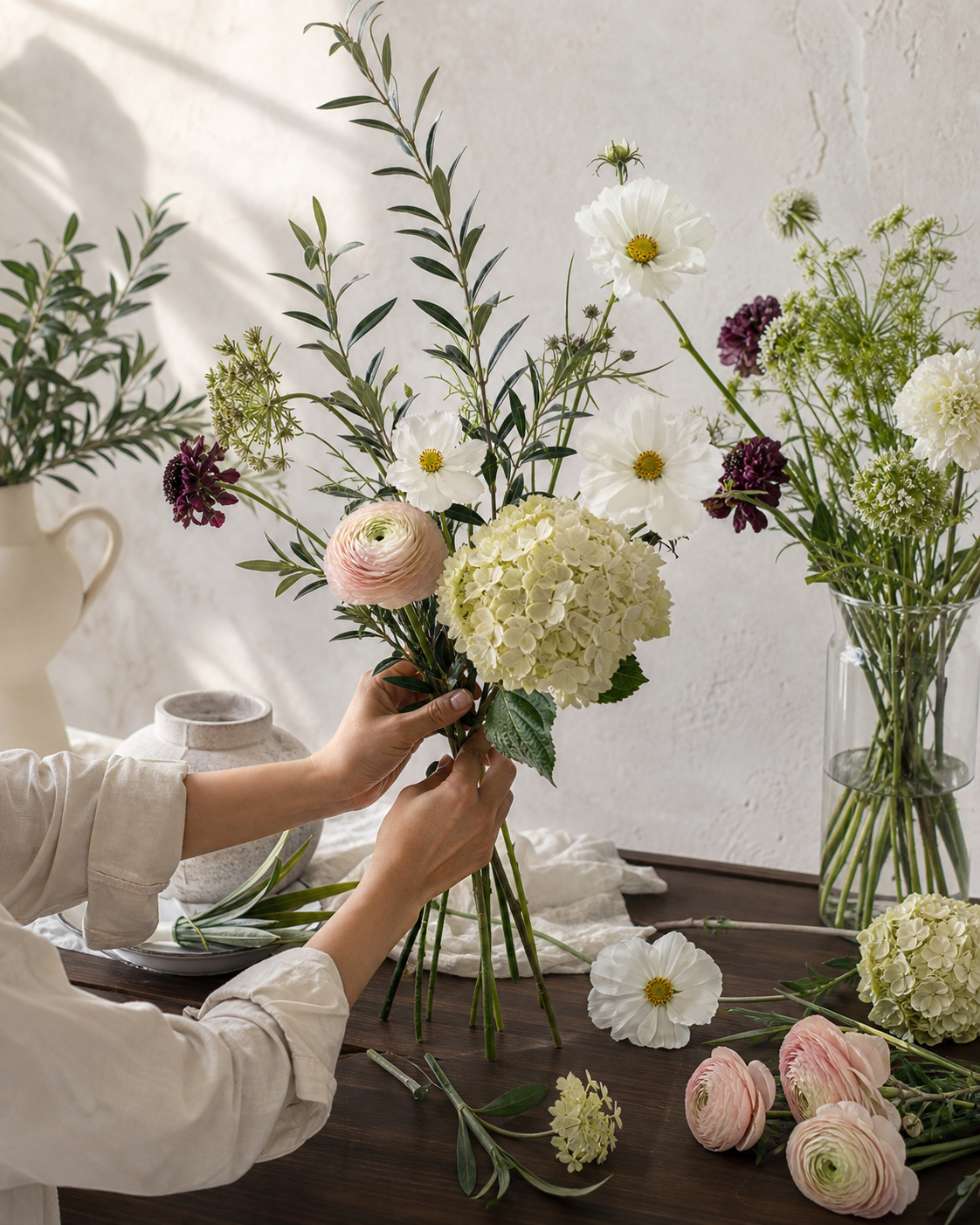
Artificial flowers make DIY wedding florals genuinely feasible, because you can practise. With fresh you get one attempt.
Start with the centrepiece
Build one complete centrepiece first, well ahead of time, and live with it for a week. Look at it in daylight and in evening light. Photograph it on your phone — cameras reveal problems the eye compensates for, particularly stems all sitting at one height.
Once one is right, count the stems you used and multiply. Buying to a proven count is far more reliable than estimating.
Height rules for tables
Centrepieces should sit below about 14 inches or above about 24. Anything between blocks sightlines across the table — guests spend the meal leaning around it.
Low arrangements are more forgiving to build and cheaper. Tall ones need a weighted vessel; a top-heavy arrangement on a table that gets knocked is a real risk with a full room.
Colour
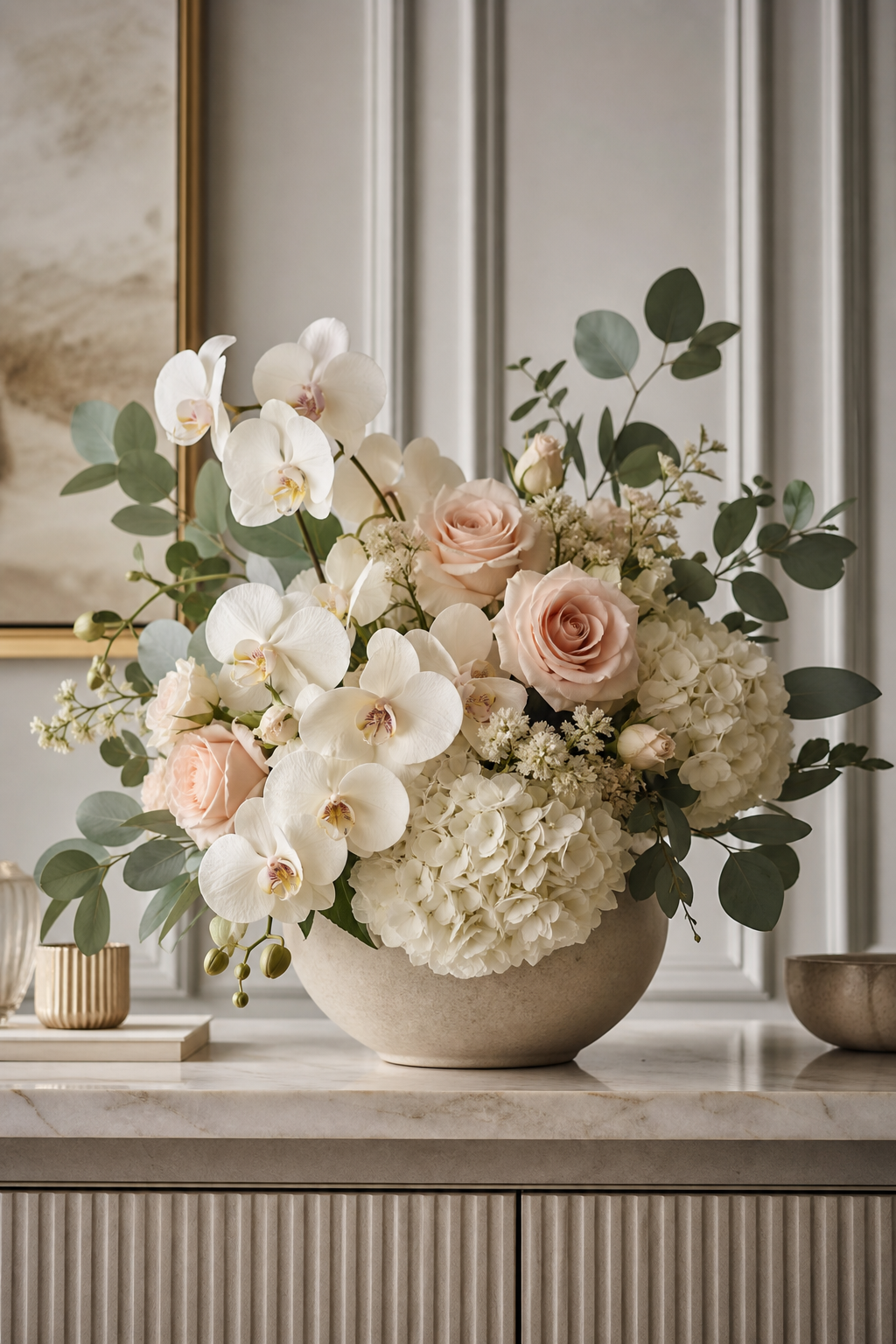
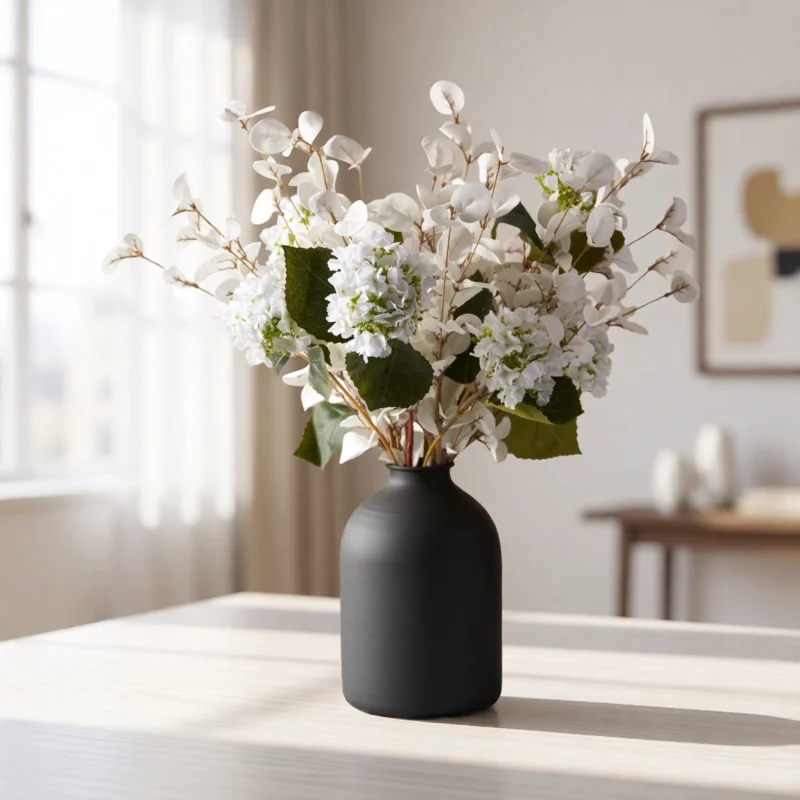
Most wedding palettes are one or two colours plus greenery, and white or ivory dominates. Our white and ivory range covers hydrangea, roses, baby’s breath and eucalyptus, which between them build most classic arrangements.
A note on white: fresh white flowers brown at the petal edges as they age, and dried white goes cream. Artificial white stays white, which is one of the few cases where artificial is more reliably true to colour than the real thing.
Assemble early, store upright
Finished arrangements should be stored standing, not flat. A cardboard box tall enough to hold them upright, with crumpled paper around the bases to stop them sliding, keeps everything in shape. Flat storage crushes heads and the damage does not always recover.
Afterwards
This is the part that does not exist with fresh.
Keep them. Centrepieces go into the house. A wedding arrangement on a hallway console is a better keepsake than a pressed bouquet in a frame.
Sell them. There is an active resale market for wedding florals. Recovering a meaningful share of the outlay is realistic, which changes the effective cost significantly.
Lend them. Arrangements circulate between friends and family. Some sets go through three or four weddings.
None of this is available with fresh flowers, and it is the argument that persuades most people who were initially set on fresh.
Quality: what to look for
Wedding photographs are close and well lit, so quality matters more here than in general home styling.
Matte petals. Gloss is the giveaway, and flash photography makes it worse. Petals should have a matte or very lightly sheened finish.
Layered petals, not moulded. Look at a flower head side-on. Individually cut and layered petals cast small shadows; a single moulded piece does not.
Wired stems. Necessary for bouquets and arch work, where stems need to bend and hold. Also lets you trim to height.
Order samples. Buy one stem of each candidate before committing to twelve tables’ worth. Photograph them under the lighting you will actually have. This costs very little and prevents the expensive mistake.
Our wedding and events range is the white and ivory selection from the wider catalogue — hydrangea, roses, eucalyptus and baby’s breath, in the combinations that appear most often in wedding work.
A sensible middle path
Most couples who look at this properly end up splitting rather than choosing.
Fresh for the bridal bouquet and buttonholes — small quantity, held close, photographed most. Artificial for centrepieces, arch greenery, aisle arrangements and anything at the venue — large quantity, viewed from a distance, arranged in advance, kept afterwards.
That combination gives you the scent and close-up quality of fresh where it counts, and removes the timing risk and waste everywhere else.
